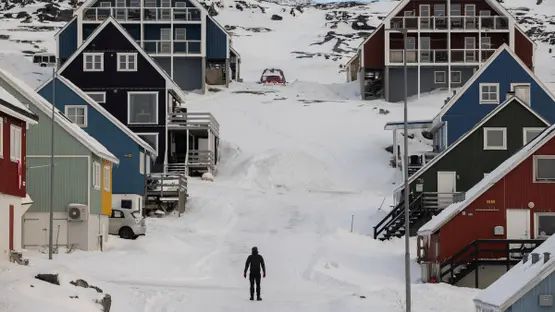
The rapid rise in Earth's temperature has accelerated the melting of ice in the Arctic, opening up sea routes that were previously covered in ice and unsuitable for navigation. This expansion of maritime activity in the Arctic has brought with it severe environmental challenges, most notably pollution from ship emissions. The issue of Arctic navigation has garnered increasing global attention, especially following controversial statements from US President Donald Trump regarding the intention for the United States to seize Greenland. However, this political interest has been accompanied by significant environmental costs, the most prominent of which is the emission of 'black carbon' or soot. These are fine particles released by ships during fuel combustion and significantly speed up ice melting. In this context, several countries, in meetings with international maritime regulatory bodies, are encouraging ships operating in the Arctic to use cleaner and less polluting types of fuel. The danger of black carbon lies in its deposition on the surface of glaciers, snow, and sea ice, reducing their natural ability to reflect sunlight back into space. As a result, these surfaces absorb more solar heat, making the Arctic the fastest-warming region on Earth. The effects of Arctic ice melting are not limited to this region alone; they extend to influence weather and climate patterns worldwide. The 'Clean Arctic Alliance,' a coalition of several non-profit organizations concerned with the Arctic and navigation in it, stated that the world is now trapped in a vicious cycle of rising temperatures in the Arctic. They emphasized an urgent need for the general regulation of emissions, and black carbon in particular, noting that neither is currently subject to any regulatory frameworks or binding laws. Last December, France, Germany, the Solomon Islands, and Denmark submitted a proposal to the International Maritime Organization (IMO) calling for a mandatory requirement for cargo ships sailing in Arctic waters to use a special 'Arctic fuel.' This fuel is lighter than traditional fuel and produces lower emissions of carbon pollutants compared to commonly used types of marine fuel. The proposal includes a set of measures that shipping companies must adhere to, as well as defining the geographical scope for applying these rules, which covers all vessels sailing north of the 60th parallel. Despite the ban on using the polluting heavy fuel oil (HFO) in the Arctic from 2024, its impact remains limited so far, partly due to legal loopholes that allow some exceptions. The drive to reduce black carbon emissions, which studies show has a global warming impact 1,600 times greater than carbon dioxide over a 20-year period, is taking place against a backdrop of geopolitical competition and a sharp conflict of interests on both international and regional levels, especially among the Arctic-bordering nations. In recent months, Trump's repeated statements about the need to seize Greenland to enhance US national security have sparked a widespread debate, touching on issues of the island's sovereignty and the future of NATO. As a result, environmental pollution and other issues related to protecting the Arctic have been pushed down the list of international priorities. Trump had previously expressed strong opposition to global climate policies, calling the issue a 'hoax.' Last year, the IMO was expected to adopt new regulations imposing fees on carbon emissions in the shipping sector, which supporters believed would push companies to transition to cleaner fuels and, where possible, to electric ships. However, Trump's intervention and pressure on countries to vote against this measure led to its postponement for a year, making its future unclear and weakening the chances of rapid progress on current proposals to limit black carbon emissions in the Arctic. Challenges are not limited to the international stage but also extend within the Arctic-bordering countries themselves. Internal tensions over imposing stricter environmental regulations are particularly prominent in Iceland. Despite its leadership in green technologies, such as carbon capture and geothermal heating for heating, environmental activists believe the country has not made the desired progress in regulating marine pollution. This is attributed to the significant influence of the fishing industry, which is the most important sector of the Icelandic economy. Arnór Víðarsson, chairman of the board of the Icelandic Nature Conservation Association, stated that this industry focuses on achieving profits but rejects taxes and shows insufficient concern for climate and biodiversity issues. He added that the high costs of using clean fuel or electric ships face clear opposition, noting that the government has begun to realize the importance of this issue but is still awaiting the approval of the fishing sector. To date, the Icelandic government has not taken a final stance on the 'Arctic fuel' proposal. The Ministry of Environment, Energy, and Climate stated that the proposal is positive in its goals and basic substance but requires more in-depth study and evaluation, while confirming Iceland's support for strong measures aimed at reducing ship emissions and cutting black carbon. The Arctic has seen a significant increase in black carbon pollution due to the large increase in the movement of cargo ships, fishing boats, and some cruise ships in the waters connecting northern Iceland, Greenland, Canada, Russia, Norway, Finland, Sweden, and the United States. According to the Arctic Council, an intergovernmental international forum comprising the eight countries with territories in the region, the number of ships entering waters north of the 60th parallel increased by 37% between 2013 and 2023. During the same period, the total distance traveled by ships in the Arctic increased by 111%. Black carbon emissions have also risen significantly. A study by the Institute for Energy and Environment showed that ship emissions north of the 60th parallel amounted to about 2,696 metric tons in 2019, compared to 3,310 metric tons in 2024. The study indicated that fishing vessels were the largest source of these emissions and that the 2024 ban on heavy fuel oil resulted in only a slight decrease in black carbon levels, due to exceptions and exemptions that allow some ships to continue using it until 2029. The involved countries and environmental groups believe that enacting strict laws and regulations regarding ship fuel is the only realistic solution to reduce black carbon emissions. Attempts to restrict maritime navigation seem nearly impossible due to the large economic incentives associated with fishing and natural resource extraction, as well as the shortening of shipping distances between Asia and Europe via the Arctic, which can save ships several days of travel. However, the 'Northern Sea Route' is only navigable for a few months of the year, and even during this period, ships require icebreaker escorts due to the high risks. These challenges, along with environmental concerns, have led some shipping companies to pledge not to use this route at present. Søren Toft, CEO of Mediterranean Shipping Company (MSC), the world's largest container shipping company, stated in a post on LinkedIn last month that 'the debate around the Arctic is intensifying, and commercial shipping is part of this discussion,' confirming that his company's position is clear: it does not use and has no plans to use the Northern Sea Route in the future.